Ask people what they dislike about dark chocolate and most give the same answer: it's bitter. Not the pleasant, deep bitterness of good coffee, but a harsh, dry, woody bite that lingers after the chocolate is gone.Many people assume that's simply what dark chocolate tastes like. It isn't. A good part of that harshness comes from something that was never meant to be eaten: the shell of the cocoa bean.
How most chocolate is made
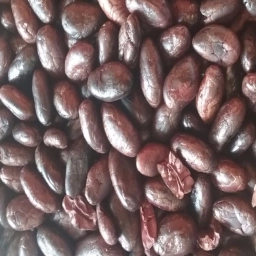
Every cocoa bean sits inside a thin, papery husk. Before beans can become chocolate, that husk has to come off. At scale, this is done by machine, and speed matters more than precision.
1. A quick roast. The beans are roasted just long enough to loosen the shell, not necessarily to bring out their best flavor.
2. Shattering. The whole beans are cracked into pieces, shell and all.
3. Blowing the shell away. Air currents or vacuums pull the lighter shell fragments away from the heavier pieces of bean (the nibs).
It works well enough, but not perfectly. Small fragments of shell ride along with the nibs and get ground into the chocolate. Food standards even allow for a small amount of shell in finished cocoa products, because machines can't remove all of it.
That shell doesn't melt into the chocolate the way the bean does. It brings woody, dry, astringent notes, the harsh edge people associate with dark chocolate.
How we make ours
We don't shatter and vacuum. We shell every bean by hand.
1. A full roast, one pound at a time. We roast the beans long enough to develop their flavor and to loosen the husk cleanly. A batch of 6 pounds takes about seven hours of roasting and shelling.
2. Hand-shelling. Because the roast has released the husk, it comes away whole. We peel each bean by hand and keep only the clean bean inside.
3. Grinding and tempering. The clean nibs go into a stone melanger for about six hours, then into tempering, which can take up to ten more hours depending on New York's heat and humidity.
4. Wrapped by hand. Each bar is wrapped in foil and labeled by hand.
Two of us spend three days turning 6 pounds of beans into 96 one-ounce bars.
What you taste
With no shell in the chocolate, the harsh, woody bitterness is gone. What's left is the bean itself: rich, rounded and smooth, with the depth you expect from dark chocolate but without the bite that makes people reach for milk chocolate instead.
The full roast matters too. It gives the beans time to develop their flavor, rather than stopping as soon as the shell is loose.
People who say they don't like dark chocolate are often the most surprised. Many of them have never tasted dark chocolate without the shell.
Come taste the difference
If bitterness is the one thing you hate about dark chocolate, give ours one bite. Stop by the shop, ask us how it's made, and taste a bar from a batch we shelled by hand.
We make only 96 bars per batch, so when a batch is gone, the next one takes three days.