What If Chocolate Had a Purity Score?
Turn over any chocolate bar and the label will tell you its calories, its fat, and its sugar. It won’t tell you what kind of chocolate you’re holding.
Was the bean treated with alkali to darken it and soften its flavor? Is that “chocolate” padded out with vegetable fat? How much shell made it into the bar? Has anyone tested it for heavy metals, and will they show you the results?
These questions matter. So we asked ourselves: what if chocolate had a purity score?
What we mean by purity
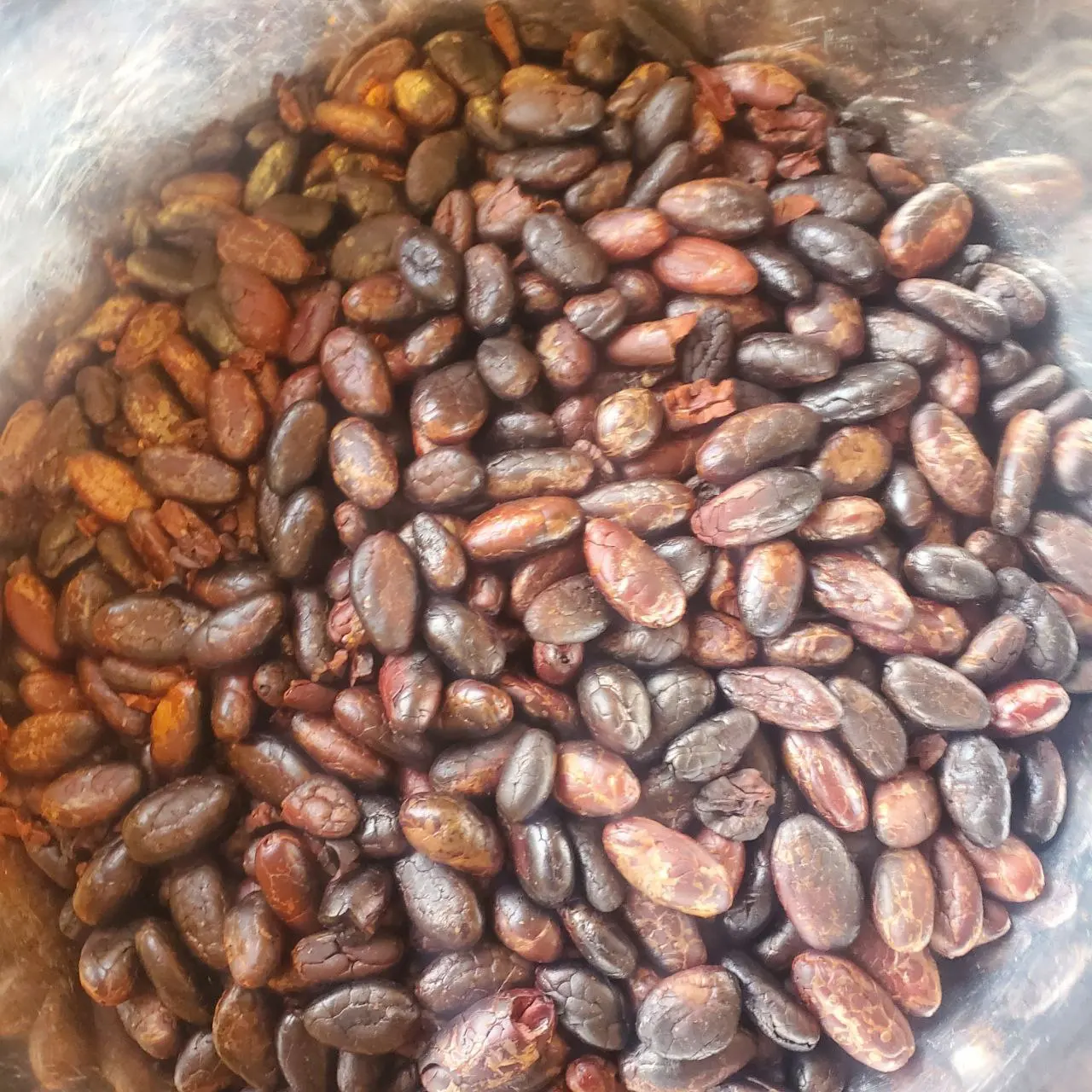
Purity isn’t a health score, and it isn’t a taste score. It’s a measure of how close a bar stays to the bean: how little was added, how little was taken away, and how openly the maker shows their work.
Here’s the scale we came up with. Five questions, two points each, ten points in all. You can use it on any bar in any store.
The Purity Score
| Question | 2 points | 1 point | 0 points |
|---|---|---|---|
| What’s in it? | Cacao and sugar only (or cacao alone) | Also cocoa butter or vanilla | Emulsifiers, vegetable fats, milk solids or flavorings |
| How much is bean? | 85% cacao or more | 70–84% | Under 70% |
| Was it alkalized? | No | Not stated | Yes (“processed with alkali” or “Dutch-processed”) |
| How was the shell removed? | Every bean shelled by hand | Machine winnowed | Not stated |
| Is it tested, and can you see the results? | Full lab certificate published | Maker says it’s tested | No information |
A score of 8 to 10 means you’re holding something close to the bean. 5 to 7 is a good bar with some compromises. Below 5, you’re mostly eating candy with chocolate in it.
Why each question matters
Ingredients. Chocolate needs only cacao, and a little sugar if you want sweetness. Everything else is there to make production cheaper, smoother or more uniform.
Cacao percentage. The number on the front tells you how much of the bar is bean. The rest is mostly sugar.
Alkalizing. Treating cacao with alkali darkens it and tames its bitterness, but it also strips away much of what makes cacao distinctive. Look for it on the ingredient list.
The shell. The shell is the part of the bean that spent its life closest to the soil and open air. Machines crack beans and blow the shells away, and some always slips through. Hands can see what machines miss.
Testing. Anyone can say their chocolate is clean. Publishing the full lab certificate, every number, good and less good, is how you prove it.
How our chocolate scores
We’d be lying if we said we didn’t build this scale with our own chocolate in mind. These are the five things we decided to care about, years ago.
→ ingredients: cacao beans and unrefined sugar; our 100% bar is cacao alone. 2
→ Cacao: 85% and 100%. 2
→ Alkalized: never. 2
→ Shell: every bean shelled by hand, for more than 300 batches. 2
→ Testing: our full heavy-metals certificate is published, including the number that isn’t our best. 2
Score: 10 out of 10.
But don’t take our word for it. Take this scorecard to the store, or to your own pantry, and score the bars you already love. Score ours too. That’s the point.
What the score can’t tell you
A purity score says nothing about how chocolate tastes, and taste is why we make chocolate in the first place.
For that, there’s only one test: take one square, press it gently to the roof of your mouth, close your eyes, and let it melt.
Come by the shop and we’ll guide you to how a square has it's maximum impression in you.
Ridgewood Chocolate
6002 Catalpa Ave, Ridgewood, Queens
Monday to Saturday, 11am to 8pm
See our lab results → (lab tested)
Why we shell every bean by hand → (the-old-way)