The Old Way: Why We Still Shell Every Cacao Bean by Hand
For centuries, chocolate began with human hands.
Cacao beans were toasted over heat until their thin shells loosened, then peeled one at a time, so that only the clean bean inside, the nib, went onto the grinding stone.
In Oaxaca, Mexico, traditional makers still work this way. Beans are toasted on a clay griddle called a comal, peeled by hand, and ground on a stone metate into discs of drinking chocolate, made to be dissolved in hot water or milk.
It’s a beautiful tradition. But those discs are made for drinking, not for eating as a bar.
Then came the machine
When chocolate became an industry, the hands were replaced. Factories began cracking roasted beans in machines and blowing the shells away with streams of air, a process called winnowing. It’s fast: tons of beans in the time it takes us to shell a single batch.
But winnowing isn’t perfect. Bits of shell always slip through, and food standards allow a small amount to remain in finished chocolate. The shell is the part of the bean that has spent its life closest to the soil and the open air.
The machine was faster, so the machine won.
Find another one
Find another chocolate maker who shells every cacao bean by hand for its bars. We’ve looked for ten years. We haven’t.
In that time, we’ve made more than 300 batches, and every bean in every one of them was shelled by hand, in our own shop. If there’s another maker out there doing the same, we’d love to meet them. Until then, we’ll keep doing it the old way.
What it takes
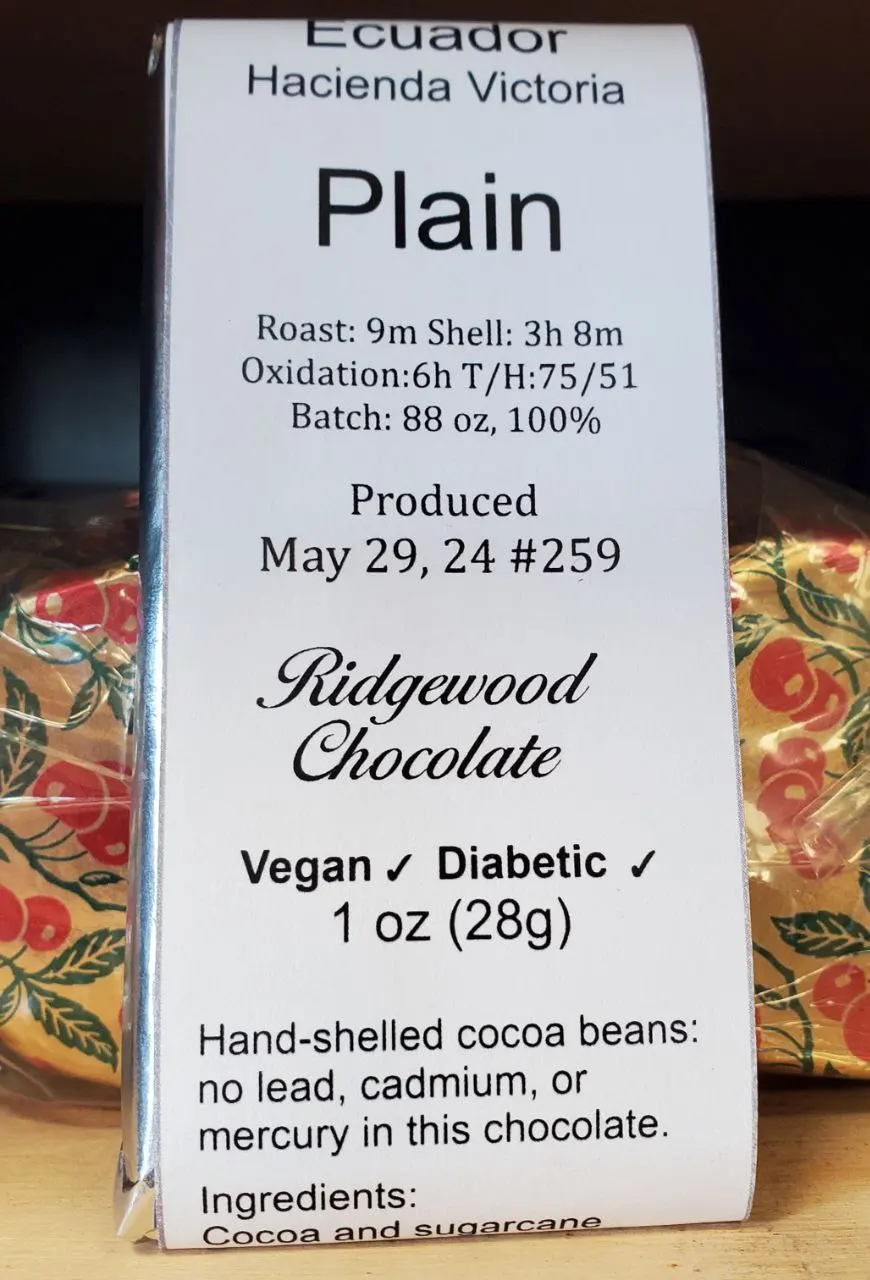
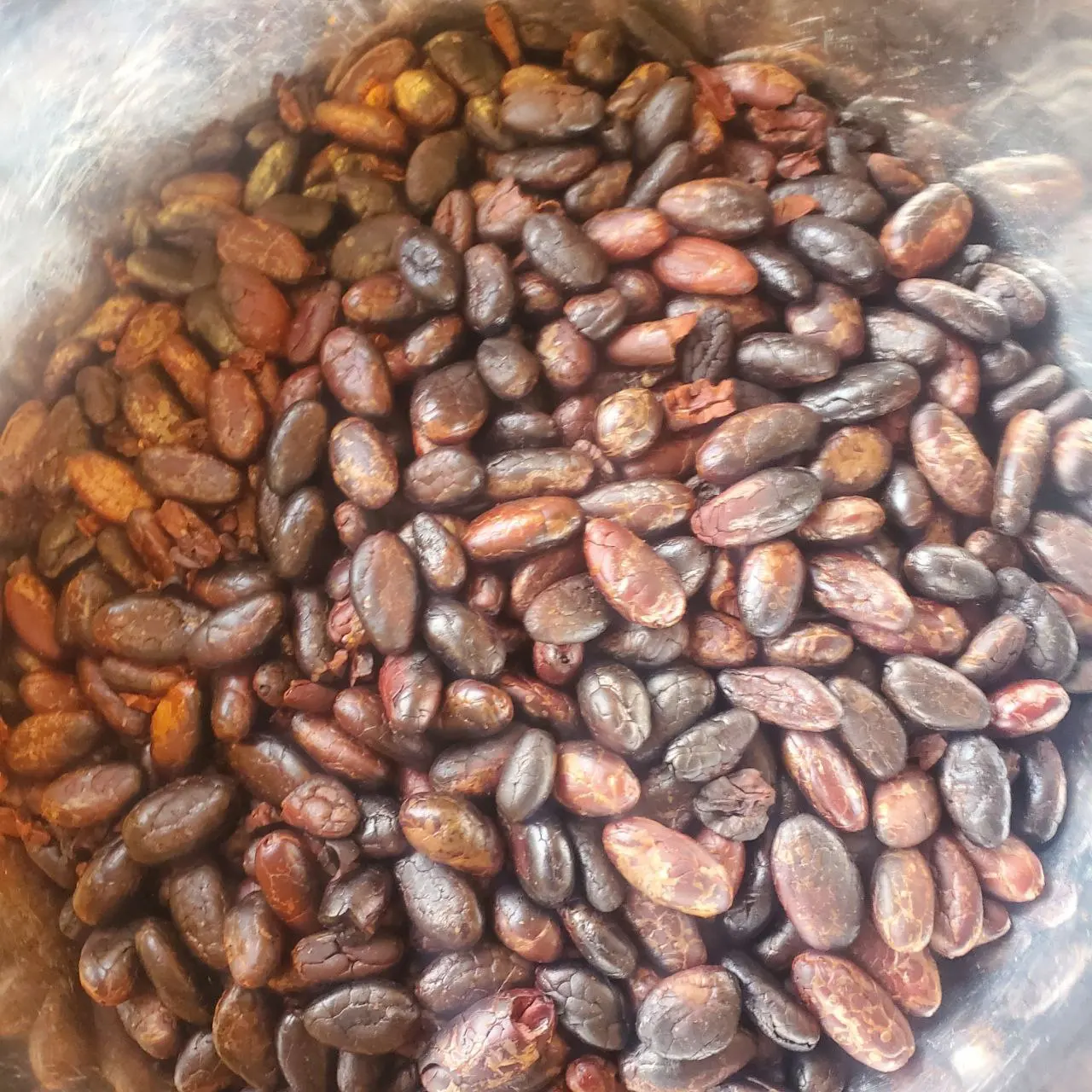
We roast whole beans about a pound at a time, deeper than most craft makers, watching until the shells begin to lift away on their own. When the beans cool, we shell every one by hand.
For one batch of our Ecuador San José bar, shelling took 3 hours and 4 minutes. Each 28-gram bar is made from about 20 to 25 beans, and every one of them passed through our fingers before reaching the stone grinder.
A machine can’t tell a perfect nib from a broken piece with shell still clinging to it. Hands can. Every nib is seen and touched before it becomes chocolate, and anything that doesn’t belong stays out.
What you taste
Hand-shelling means nothing but clean nib reaches the grinder: no shell, no grit, no off-notes. Combined with our deep roast, it gives a taste that’s roasted, never bitter, and unmistakably clean.
What’s left is a bar with two ingredients, cacao and unrefined sugar, and nothing added to cover anything up. Taste it once and you’ll understand why we never took the shortcut.
A tradition worth keeping
We think of hand-shelling the way a baker thinks of kneading by hand, or a carpenter of cutting joints by hand. It isn’t the fastest way. It’s the way that shows care in every step.
Chocolate once began with human hands. Ours still does, from the first bean to the finished bar.
Come see it for yourself
Stop by the shop and we’ll show you roasted beans with their shells lifting, the clean nibs, and the stone grinder. Then take one square, press it gently to the roof of your mouth, and taste what the old way tastes like.
Ridgewood Chocolate
6002 Catalpa Ave, Ridgewood, Queens
Monday to Saturday, 11am to 8pm